
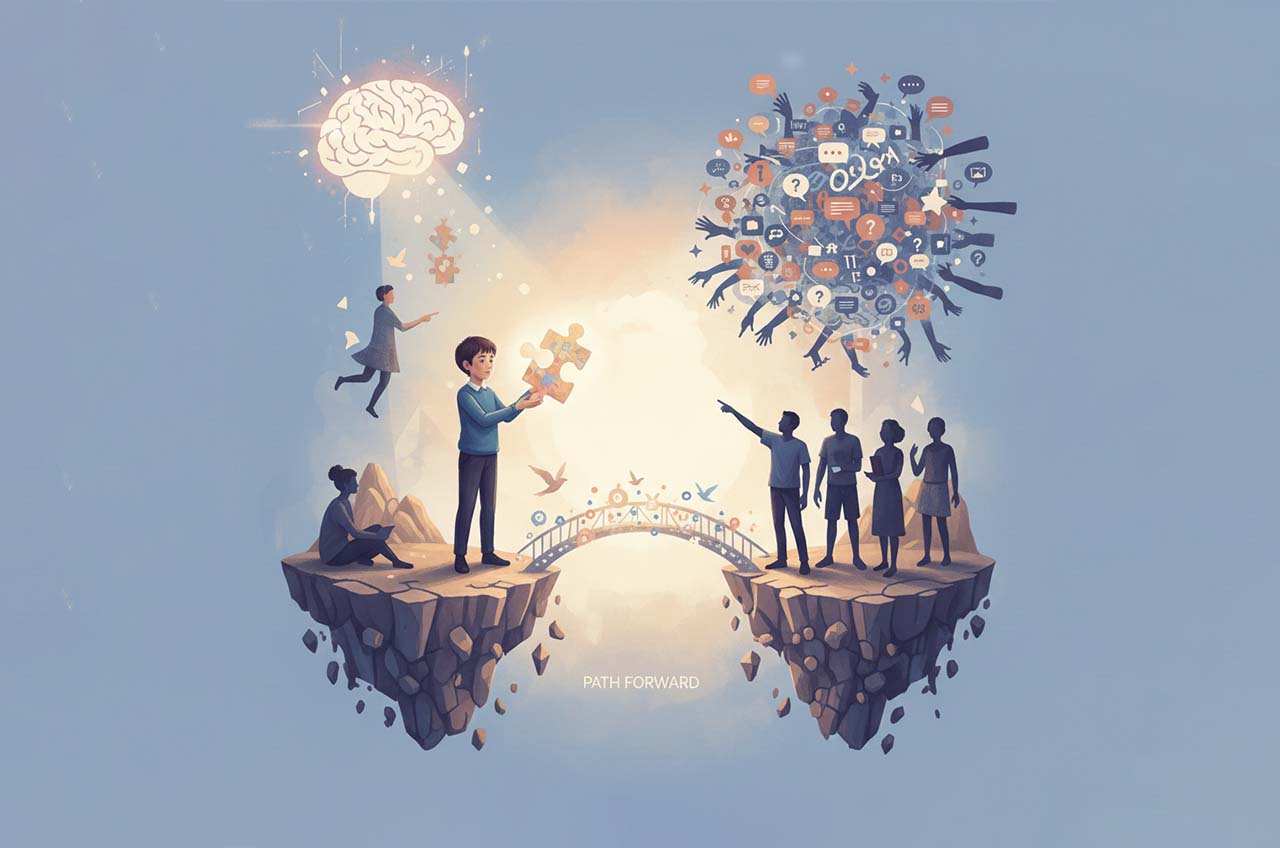
Autism has reentered national headlines following recent remarks from Jay Bhattacharya, Director of the National Institutes of Health (NIH), and Robert F. Kennedy Jr., U.S. Secretary of Health and Human Services. Their comments different in framing but equally provocative have sparked widespread reactions from researchers, advocates, families, and autistic individuals.
Rather than deepening divisions, many experts say this moment presents an opportunity: to examine the science, understand the history, and elevate the lived experiences of autistic people. They also caution against politicizing neurodevelopmental conditions, warning that ideological framing risks spreading misinformation and undermining meaningful progress.
The Comments That Sparked Debate
Dr. Bhattacharya suggested that progress in autism research has stalled because scientists are “frankly scared to ask the question.” However, federal data show that autism research remains active and well-funded. In 2024, the NIH allocated roughly $300 million to more than 700 autism-related research projects, covering genetics, development, co-occurring conditions, early interventions, and lifespan outcomes.
Additionally, the NIH’s Autism Centers of Excellence (ACE) program received approximately $100 million to expand research into underserved populations, health disparities, female diagnoses, and mental health in autistic adults.
Meanwhile, Secretary Kennedy described autism as a “preventable disease” and an “epidemic,” and stated that many autistic individuals cannot “pay taxes,” “go on dates,” or “use a toilet unassisted.” Advocates argue that such generalized statements risk reinforcing outdated stereotypes.
While some individuals particularly those sometimes described as having “profound autism”—require significant daily support, experts emphasize that autism is highly heterogeneous. Broad characterizations fail to reflect the diversity of the autistic community.
A Spectrum of Experiences
Autism Spectrum Disorder (ASD) is a lifelong neurodevelopmental condition that affects social communication, behavior, and sensory processing. It presents differently in every individual.
Some autistic people require daily support. Others live independently, pursue higher education, maintain careers, build families, and contribute across industries.
Autistic advocate Lydia X. Z. Brown has said, “We are whole people, not broken versions of ‘normal.’ Our worth does not depend on our productivity, our speech, or how well we ‘blend in.’”
Families of individuals with higher support needs often face significant emotional, financial, and logistical challenges. Advocates stress that these realities deserve recognition—without allowing narratives of hardship to define autism universally.
Understanding Stigma and Diagnostic Gaps
Stigma remains one of the most significant barriers facing autistic individuals. It manifests through assumptions of incompetence, exclusion, and reduced opportunities.
Girls, women, nonbinary individuals, and people of color are frequently diagnosed later – or misdiagnosed- due to historically biased diagnostic frameworks. Research was long based primarily on white male subjects, leading to gaps in recognition.
Many autistic girls and women, for example, may “mask” traits by mimicking social behavior, sometimes resulting in misdiagnoses such as anxiety disorders or borderline personality disorder. Similarly, culturally uninformed diagnostic tools have contributed to disparities in identification among marginalized communities.
Experts emphasize that stigma is not permanent. Education, inclusive research, and centering lived experiences can shift public perception from deficit-based narratives toward dignity and understanding.
Scientific Progress and Federal Policy
Autism research has expanded substantially in recent decades, exploring brain development, sensory processing, genetics, mental health, and effective interventions. Early and individualized support has been shown to improve long-term outcomes.
In December 2024, Congress renewed federal commitment through the Autism CARES Act of 2024, authorizing approximately $1.95 billion over five years for research, workforce development, and service coordination.
Key provisions include:
-
Expanded research on underserved and underrepresented populations
-
Increased training for developmental-behavioral pediatricians
-
Creation of an Autism Intervention Research Network on Communication
-
Greater transparency in NIH budget planning
The legislation builds upon earlier bipartisan efforts, including the Combating Autism Act of 2006, demonstrating sustained cross-party support for autism research and services.
A Brief History of Autism Diagnosis
Understanding autism’s diagnostic history helps explain why identification rates have increased over time.
-
1911: Swiss psychiatrist Eugen Bleuler coined the term “autism” as a feature of schizophrenia.
-
1920s: Grunya Sukhareva documented traits now associated with autism, though her work was underrecognized for decades.
-
1943: Leo Kanner described “early infantile autism,” distinguishing it from schizophrenia.
-
1944: Hans Asperger identified a related profile later termed Asperger’s Syndrome.
Diagnostic manuals evolved over time. The American Psychiatric Association did not list autism as a separate diagnosis in the 1952 DSM-I. Autism gained formal recognition in 1980 (DSM-III) and was consolidated into Autism Spectrum Disorder (ASD) in the DSM-5 in 2013, with clarified criteria in the DSM-5-TR (2022).
Rising diagnosis rates are widely attributed to expanded criteria, improved awareness, and better screening – not evidence of an “epidemic.”
Don’t Politicize Autism – Humanize It
Mental health and neurodevelopmental conditions affect people across geography, race, socioeconomic background, and political affiliation. Experts and advocates argue that the goal should not be ideological victory, but human dignity.
Historically, bipartisan collaboration has advanced autism research and services. Continued cooperation- grounded in evidence, compassion, and inclusion – remains essential.
Autism is not a political identity. It is a human reality. The conversation moving forward, advocates say, must center accuracy, respect, and the voices of autistic individuals themselves.